The small place of big God
I wrote this – my second short story (if one can call it that 😊) – prompted by the philosophical and spiritual reflections that had been swirling in my mind, particularly since I began living in the capital. It is a work of fiction, yet it incorporates flashbacks to a conversation I once had with an old friend – a dialogue touching on life, people, one’s surroundings, cultural context, society, and the challenges of the present day.
It is May 2023. I met up with a former classmate named Nick. Nine years ago, we attended a small private school in southern England together. Later, our paths diverged. Nick found his calling in music and, after graduating from university, began traveling the world extensively; his work allowed him the freedom not to be tied to any single location. I, meanwhile, moved to Ukraine, as several acquaintances I had met back in England were from there. At the time, I had the opportunity to start a business in the "glorious city of Lviv"—or at least, that is how I liked to call it—until the full-scale war in Ukraine compelled me to shift my focus to various cities in central and eastern Ukraine, immersing myself in the history and customs of the people there.
Nick arrived in Lviv quite unexpectedly. We had lost touch for nine years, only reconnecting on Facebook within the last year. Then, yesterday, he messaged me to say he had come to Ukraine for nine days to establish ties with a humanitarian organization in Lviv and wanted to meet up and spend some time together. Who would have thought? I was pleasantly surprised and delighted by the news. We did end up meeting the following day, though.
Nick wasn't as reserved as I was. When we met in the city center, he ran over to hug me and started shaking my right hand vigorously. 😁 His wife was with him. We had a wonderful time! We spent two hours together—the three of us—enjoying a delicious lunch, and then Nick and I spent another three hours walking around the city and the park.
You know, it’s an incredible feeling when people who knew each other in childhood meet up—much like we did! It might seem strange; back in England, nothing really connected us other than school, and that certainly wasn't the sort of thing that would bring us closer together. Yet, during these days in Lviv, we surely learned more about each other than we ever could have during ten years of school combined. We saw each other — and life itself—in a true light, from a broader, grander perspective.
And it is not just about the experience we have gained during our mature years. What struck Nika and me—and what he actually shared with me—was something else: how the "scale" of the world can help us think on a grander scale; how changing one’s place of residence or surroundings helps us dream, transform, and get to know people, the world, and something else—something we cannot yet see Yet, I was even more struck by the fact that these very conversations would lead us somewhere further—much further than I could have expected.
We shared our experiences, achievements, and various thoughts, and in the course of the conversation, we arrived at issues that concerned us both. However, we discovered that Nick and I had different answers—at least, the answers that existed at that time.
While walking through Stryiskyi Park, we talked about the books we had read—specifically fiction and history. Nick told me about a particular novel. Its plot centered on a medieval traveler who, for the first time in his life, journeyed from Brandenburg to Nepal and decided to stay there for many years. Later, Nick spoke about the author:
– You know, the author experienced something similar: when he lived in Europe back then, he viewed the world much like many other Germans did. But when he moved to Asia, his perspective not only changed but expanded—both his literal vision and his worldview, in every respect…
– That’s interesting; I think something similar happens to anyone who changes their life so drastically! Though I’d like to clarify one point. You say his perspective changed and broadened. How would you describe it after he read the book? Did that perspective become completely different—unlike what it was before? Or did something from his past life remain—some of those views, understandings, and ways of thinking typical of a European?
– Oh, well not exactly. A lot remained, but perhaps he gained even more while living in Asia... You know, it’s like reading a third of a great book—or maybe even less—and feeling like you can roughly guess the rest of the plot. That’s what it was like when the author was living in Germany, imagining the culture and mindset of the Asian countries he was about to move to. But actually living in Asia — that’s like reading the remaining 66 percent of the book.
Here, we focused on the author — one who was also named Nick, and started joking:
– Nicks who constantly broaden their horizons That’s literally your nickname on the messenger @nickname. So abstract, that it even makes me thinking as Socrate: "I know that I know nothing".
– Haha, maybe I know very little about the world, but I actually know about myself.
– Oops, sorry. I agree there, – I replied.
– Don't matter! – Nick patted me on the shoulder. It’s just my way of hiding. 😅
We have laughed.
I decided to get back to the discussion regarding the book:
– You’re right; that reminds me of the time I was reading a dystopian novel by George Orwell. I had actually stopped around page 150 and didn't pick it up again until a year later, and the book's climax turned out to be quite unexpected. It also reminds me of when I was figuring out my career path and studying front-end development; those first six months with a mentor gave me a solid foundation and a taste of the work. I thought, "Alright, I’ll just immerse myself in this for now, and once I can handle it with my eyes closed, I’ll master back-end development too." But after working at the company for a year, I realized just how much I still didn't know!
This encouraged Nick, and he shared that something similar had happened with his musical growth. We went on to recall many moments from our lives and shared stories from the past.
– But you know, I still like this line of work, – I said with a smile.
– That’s great, buddy! – said Nick. – So, we’re the kind of people who find satisfaction in our work – we feel like we’ve found vocation of ourselves.
– Yes! – I said.
– And I realize that there is still so much I do not know! – Nick added. – The world is so vast. When I lived in England, the country seemed huge to me. In reality, if you consider the average English person—or even a French person—their country might seem vast to them, at least until they fly to America. You only have to compare the land area of a European country with that of Brazil or Canada to see the difference immediately. It’s all quite complex: people from diverse cultures live in Canada and the USA. Even Canada’s provinces differ in terms of culture and the pace of life. Take, for example, Quebec, with its large French population; Saskatchewan, home to a significant Ukrainian diaspora; or British Columbia, where you immerse yourself in nature and notice the reverence Asians have for the natural world. And every such trip takes time—time to adjust, time for the pieces of the puzzle to fall into place in your mind–
– Did these puzzle pieces complete a picture made up of old ones? Not exactly a brand-new set?..
– Exactly, – Nick answered in the affirmative. People from different parts of the planet share much in common. This prevents your initial or old picture from falling apart. Instead, your picture is simply enriched! You begin to see more.
– It’s bigger and more expansive — which is great! I used to live in a smaller city. Lviv, however, holds so many intersecting stories. Every day, I see buildings from various eras. People from all walks of life lived here—from Armenians and Georgians to Germans and French—not to mention the main group that lived right in the midst of them all.
Nick, after all, took his train of thought a step further due to his experience:
– Ooo, I lived in New York for a while. I know what you mean. If you’ve ever lived in New York or Los Angeles the vibe of people from all over the world — whether individually or all together — is something that just can't be put into words..

Here, I decided to share something personal. I told Nick that when I lived in England, I was interested in only a narrow range of things. Then I moved to Lviv, and things began to change. But the change wasn't driven solely by my surroundings, nor just by local or global events. The thing is, the pieces of the puzzle wouldn't fall into place until I started looking for answers where they could actually be found and verified—where they were worth looking for. And that helped me think more broadly, too.
Nick thought for a moment, then replied:
– I remember you once wrote to me on Facebook that you were reading history books and that the war in Ukraine had made you rethink things. Also, even though I’ve only just arrived in Ukraine, for many people from England, Germany, and Sweden, the war in 2022 upended many long-held views on life.
I agreed, and since we had touched upon the topic of the war in Ukraine, the conversation naturally shifted to spiritual and ethical issues. Nick shared his thoughts on the European mindset:
– The British, the Germans, and even the French are still rethinking a great deal. There may well be a divide in perspectives within each of these countries. It seems to me that Europeans are focusing more on security—though not everyone; setting aside the governments, there are organizations—and even churches—that are open to supporting Ukrainians.
Faced with serious questions
– I’ve noticed that the war in Ukraine, and possibly the one in the Middle East, too—has triggered a sort of 'domino effect' around the world, – said Nick. – When a person goes through something like that, they re-evaluate their values.
Nick began to recall another book he had read.
– Like any living being, a person seeks self-preservation. Thanks to God, humanity has reached a stage where the value of life, human rights, and human freedom play a key role. Yet war is arguably the worst possible turn of events. … It is simply that the Western countries I spoke about have learned to avoid them in every possible way.
– Yes, – I agreed, – but I see a divide here now. Some think on a grand scale and are ready to take responsibility, while others remain passive, seeking primarily to shield their own communities from negative influences. I would be interested to examine how the percentage of believers in Europe shifts amidst these events. It seems that some people are becoming more devout — which might manifest in their willingness to help those grieving—while others are moving in the opposite direction. Something similar is happening in Ukraine, though it feels like a litmus test, in my view.
– The world has become more militarized than it was a few years ago. You can see it, – Nick said, advising me to be more clear and assertive about moving in the direction that is best for me, rather than one others might try to impose.
– Yes, – I agreed, – And this leads me to the conclusion that even this world does not guarantee me complete protection, safety, or stability — not even a guarantee of tomorrow.
It was then that I first noticed a trace of sadness and disappointment in Nick’s eyes. That disappointment stemmed not from my position, but rather from the fact that we saw a world of people who reacted to evil in different ways—a world that offered us no reliable refuge anywhere.
A world of choice and no guarantees
We were leaving the park, talking about the country Niko wanted to live in — where the government is currently introducing changes that are causing at leat dissatisfaction of citizents — and about how the first deportations and the new president's specific policies have now emerged in the US.
The next day, Nick invited me to the media center — located at the very spot where he had performed one of his original songs — and the experience left me feeling spiritually uplifted. The song contained specific lyrics Nick had chosen so he could present it to Ukrainians:
Love can be simple, or it can be complex.
It remains until the day is done,
it persists in moments of calm.
It walks the road alongside you.
That day, I could not help but share the thought that there is, after all, something constant in the universe—something that would remain even as the world divides. Yet a world divided in its views—and especially in its values—evokes in people a psychological sense of division within the spiritual realm as well: either God is not truly as great, influential, and sovereign as believed, or there is something hidden from them.
I said:
– I started to recall in my mind jewish history in Old Testament. A person might see a "giant" (someone stronger than themselves), a threat, or an adverse situation, and lose faith in God’s power. Alternatively, they might harbor doubts yet still maintain their faith. The difference may seem slight, but it is of great significance. As I have observed, it was the latter approach that ultimately put an end to Nazism, slavery, and all manner of large-scale injustice.
Has God really changed?
Realizing where I might be leading, Nick shared openly with me:
– I realize that, no matter how much I explore the world, there is still so much I may not know about people. It is becoming harder to understand what drives them, though culture, upbringing, and worldview undoubtedly influence their decisions. For some, God is a true driving force — perhaps they are more spiritual. Yet, I have many questions — even for God — given how wars have shaken the world. Christianity, for instance, offers sound principles and upholds wonderful values There is something to it, but I get the feeling that God (if He exists) changes over the course of history. One need only delve into history — from the dawn of humanity to the present day — to see that.
– Then I wonder, how actually do these things have an effect? – I asked.

Nick cited examples of countries that set a positive precedent. He mentioned the British, the French, the Americans, and the Swedes—nations enjoying (or so it seemed) a high standard of living. He then spoke of the people from past generations whose contributions made such conditions possible. I listened, yet I found myself increasingly trying to understand what led to the conclusions reached by the figures Nick described — those "shining lights" like Abraham Lincoln, Winston Churchill, and Adam Smith, who steered the world toward positive change during turbulent times.
"Nick, I also believe that the worldview prevalent in Europe — and later in America—over the last few centuries played a significant role. Something truly good did begin with the kind of people you mentioned. But what enabled them to become who they were in the first place? I see it as the work of the Lord within those who obey Him—that is what set the process in motion. Yes, people can become corrupted after great, brilliant achievements; they can rise in one area of life only to fall in another. Unfortunately, the vast majority of people live in ways contrary to God’s character and will. Entire generations rise and fall—it’s like a sine wave. Yet, God can shift that 'sine wave' upward! And no matter how difficult things get, there is still more good to be found in how people respond to war, evil, and immorality." From this, I would conclude that God remains as He is described in the Bible.

– That may be so But what, then, can be said about the grim and brutal eras that followed the Enlightenment—a time when Europeans believed that progress would put an end to major wars forever? You might note that the Western world was largely composed of believers, yet Christianity did not hinder scientific breakthroughs. Why, then, did God allow such a catastrophic failure in history, resulting in the deaths of millions? — Nick was helping me be more consistent in my reasoning.
My friend’s question was simple, yet significant.
– That is a good question. There was definitely a cause for it. Every consequence must be preceded by a cause.
After a brief pause, I asked for Nick's thoughts:
– Why do you think God changes? After all, even in your song, you describe a love that doesn't change.
Nick reflected on this:
– Hmm, if we equate that love with God ? I’m not sure. I agree with you there: love is truly something divine. In the times we live in, it’s easier for me to believe in a great Love than in a great God. We can’t see love, but we can feel it; God, however, seems too abstract to me, and I have doubts about whether He plays any part in it all.
My questions took on a more acute character:
– If that is the case, why would the Author of Love, the moral law, and conscience change during the difficult years of our lives? Nick, I believe that if God exists and yet changes, then He isn't all that great. The Bible describes Him as omnipotent, omnipresent, and the Almighty; this does not align with the idea that He changes. Conversely, while Nietzsche claimed we had killed Him—and his philosophy, by convincing people of this, spawned a great deal of tragedy in human history—many events unfolding today actually contradict that philosopher's position.
– Why do you think so? How would you explain it? – asked Nick.
– The country we are in still stands, and many people are fighting, despite being vastly outnumbered by the enemy. Many churches in Ukraine remain active and are helping citizens. Over the past two years, many lies have been exposed, and problems have been resolved in the right way. People have sometimes disagreed with me, but I personally see so many acting quietly, their deeds approved by God. It is God who works within them, guiding them and enriching them with strength, love, and wisdom. They, too, are fighting, living, and working to bring goodness and love to life. Of course, those around them might not notice this immediately, and many remain indifferent. Yet, one cannot fail to feel the goodness and love received directly from another person; having experienced it, one is unlikely to simply say "thank you" without sharing the story with others. For instance, a friend of mine from church has ministered to a great many people; now, representatives from Lviv hospitals and war veterans turn to him for help. From a spiritual perspective, this is because Christ is working through him. And the very fact that there are those who do good—or fight for what is good—shows that God has not abandoned this world, even amidst so much evil. It is not without reason that, in the Sermon on the Mount, Christ compared a person to a lamp: one does not place it under a vessel but sets it in a prominent place so that it may light up the entire house.
– Hmm, interesting. Then we need to compare that with downsides, – Nick added. – I don't know how people like your friend serve others. … Obviously, they are guided by those Christian principles, truths, and values. But, my friend, I like to look further — not just at a small percentage of people, but at everyone in this world. If we only have a "fragment," we have nothing to compare it with; however, if we survey the full spectrum, we have a basis for comparison. – Nick explained.
I had to agree with Nick. After a small pause I said:
– Once again, we have to look around in order to make comparisons. I am certain that a struggle between good and evil exists in developed countries as well. If evil were to win and triumph — or if the victory simply went to those who has more power — then I would doubt God’s greatness. But the struggle continues. There is misfortune and failure, yet that does not eclipse all the good that has happened! Otherwise, we would certainly feel the complete failure.
– Okay, maybe. – Nick fell into thought. – And yet, if you maintain that God is as He is described in the Bible, then it would be logical to look back at history. Just think about that — faith didn't simply emerge out of nowhere before Christianity! I agree that there were many people who couldn't explain a lot, and they needed something to believe in, but I think the spiritual factor played a role here as well.
– Yes, spirituality is a multifaceted thing.
God measured by time
Nick continued:
– You know, people do have some kind of faith in God, or gods, and it seems to me that’s always been the case, even now, in this era of technological breakthroughs. Although humanity has discovered so many things, making faith and God less relevant concepts for many people, it remains a personal matter.
Nick drew my attention to an important point in history — to something I should have thanked him for, as I had often overlooked it.
I decided to explain my view:
— Indeed, in Europe, Ukraine, and practically everywhere else, the pre-Christian worldview was vastly different. And if the truth lies in the Gospel — as I am convinced it does — Christianity could hardly have transformed the world in a mere ten years, given that the human world is far from God’s perfection; it exists in a fallen state. Even believers can stray from the path if they let their guard down. Meanwhile, the Western world (setting the East aside) is in a state of constant spiritual transformation, something that cannot be measured by statistics. People might believe in the God revealed, however partially, in the Bibleprovided they truly believe at all. Yet, they were unwilling to abandon their old faith and worldview. We are talking about syncretism — the blending of the faith of ancient ancestors with Christianity.
Nick added that even today, many people in positions of power are guided by a similar worldview.
At this point, I spoke somewhat emotionally, though I tried to remain coherent:
— Nick, just think about what if God is truly one — vast, accessible, and all-powerful? You see, many of those who rule and lead live as if they were gods themselves — or as if they were greater and wiser than God. A person may acknowledge Him in words, but may forget at the same time that he or she entirely dependends on Him. Human's influence, fame, power, and capabilities are limited; only God is limitless in all these respects. While we certainly take the people's faith into account, consider what might have played a pivotal role in leading such people you've mentioned about — of their own free will and desire — to embrace the teachings of Jesus, acknowledge Him as the Son of God, and recognize God as the one Creator.
We decided to take a break and stepped into a cozy coffee shop. Troubling thoughts were swirling in our minds as our conversation deepened. I picked up where I had left off:
— I don’t think our ancestors embraced Christianity without a compelling reason — at least not those who accepted it sincerely. I’m certain there must have been something that truly moved them.
— What do you think it was, setting aside the concepts of eternal life and resurrection? — Nick asked.
— Hmm, I suppose it was the depth of Christ’s teachings and the coherence of the biblical narratives. You might dispute the second point, but regarding the first — the Gospel teachings of the New Testament are truly noble and sublime. Jesus elevated God’s Law to a new level. People who heard His words couldn't fully grasp them all at once. That's why He taught using parables. And the more profound the meaning you perceive in them, the greater God appears in your eyes. Jesus shifted the focus from external rituals to the inner state of the heart and a person’s inner purity. He reminded everyone that the first commandment is to love God with all one’s heart and soul. No matter how hard people back then might have tried, I’m skeptical that they could have truly loved a minor ‘god’ — one who wasn’t the Creator of all things but merely, as they might have reasoned, a deity of a specific element or aspect of nature. It’s also hard to love a ‘god’ which you don’t trust. And as far as I know, those gods were limited in their nature and their sphere of influence. The God we learn about in the Bible is completely different: He is immense — greater than the Earth and even the Solar System — yet He is present with us and within us; therefore, He can be trusted by us, trusted completely. That is likely what moved forward our ancestors through their lifes. They sensed that vast God!
— Moved them in the sense that it helped them believe? — Nick interrupted, then fell into deep thought.
— Yes, many things has changed of what seemed fixed in their worldview previously. Much of the past faded away. Traditions remained. Their entire picture of reality began to shift.
It was clear Nick had further thoughts he hadn't voiced. A simple truth seemed to dawn on him: true, deep faith requires a distinction — a choice between a personalized, convenient ‘god’ and the real God who permeates the Universe. He sensed that he, too, was facing a challenge and a choice. If God is the Lord of all, it changes a great deal — but it also places a responsibility upon us. Still, Nick wanted to explore the issue from different angles:
— Hmm, but didn’t our ancestors feel a certain awe before nature and the Universe itself — which is truly vast? What do you think?
I paused to reflect, and Nick shared his own experience:
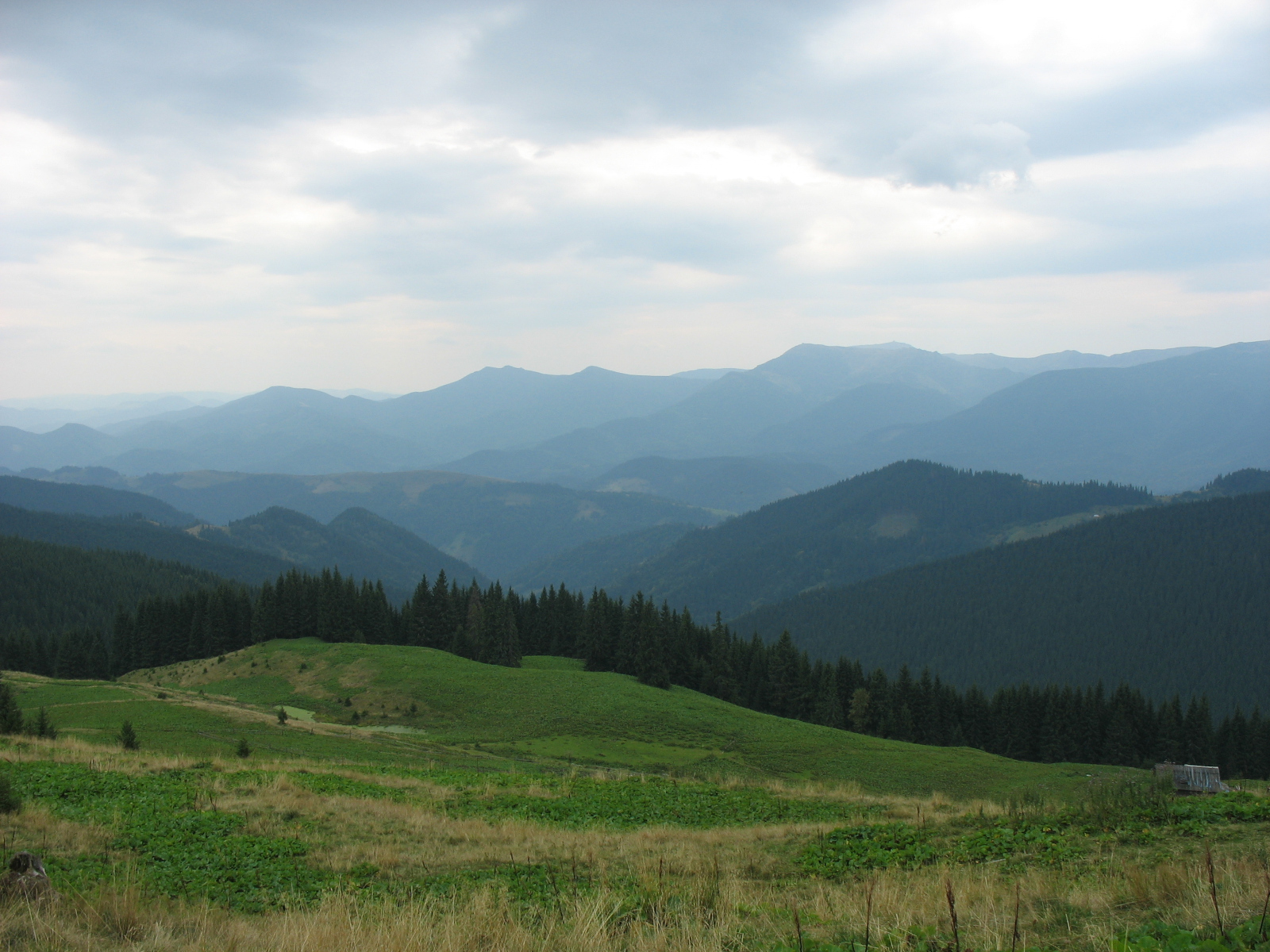
— When I was in the Andes, I was overcome by that very kind of awe. I think that’s exactly what Nick — the author of the book I told you about — felt.
God measured by nature
— All right, that’s interesting, — I said. — But if we analyze where that sense of awe comes from — or why that feeling of reverence arises After all, we can measure nature to a certain extent, especially nowadays. It’s interesting that when we feel insignificant amidst nature, there’s a sense of something greater — something you can’t put into words in those moments. I don’t know about you, but that’s how it was for me when I was in the Carpathians.
— Yes, — Nick mused, — I felt a certain spirit, if you could call it that. I don’t know where it comes from, but there is a spiritual realm — a metaphysical one alongside the physical world.
— I agree. But it’s very easy to mislead oneself — to go looking for spiritual power at random instead of seeking what we truly need.
— What do you mean? — Nick asked.
— Nick, I think that even though God is great, we can’t simply seek and know Him in whatever way feels easiest or most comfortable for us; otherwise, we won’t arrive at our true destination — where He actually is.
Realizing I might be confusing Nick with this point, I offered an analogy involving a musical instrument:
— Imagine you’re ten years younger than you are now and you want to master a complex musical style. If you skip the basics and just try to find a way to play the intricate musical parts, you’ll never achieve mastery in that style — no matter how musically gifted you might be. You might learn one or two melodies perfectly, but that doesn't mean you’ve truly mastered the style.
— Yeah, I see where you’re going with this, — Nick said.
— Right — it’s a bit like searching for God. Many people look for Him in doctrines that don’t actually reveal the true God; instead, they just confuse people and lead them away from the truth.
Noticing Nick’s serious expression as he listened — I clarified:
— I mean doctrines that fail to reveal God in His holiness and majesty. Consequently, a person becomes unable to gauge their own spiritual level — or recognize their spiritual needs and shortcomings — in a way that would allow them to truly know Him.
God and Art
Nick and I stepped out onto Svobody Avenue, where we heard an amateur guitarist singing a song by Skryabin — the work of a famous Ukrainian singer and composer:
Step into the cold water,
Don’t be afraid to get your feet wet,
To swim across miles of ice
With dolphins to the other side of the sea.
— What do the lyrics of that song say to you? — Nick asked me, then — unable to hold back — added, — Sometimes you have to do something significant — whether for physical, social, spiritual, or professional growth.
— Hmm, I suppose I can’t argue with that, — I told my friend. – I would focus more on doing everything possible to help you discover the truth that could sustain us throughout life. And that often goes against our comfort. It’s about dispelling doubts or really getting to the bottom of things — especially when those doubts and questions amount to a sort of plateau effect.
– I also can't argue with that, my friend! – said Nick.
I mused with a smile: – I just wonder, like in that song, who is swimming and who is the dolphin.
– Hmm, I suppose if you’re the dolphin, then I’m the sailor – Nick replied humorously.
– Haha, it could easily be the other way around. – Nick made me laughing. – It’s a fact that we’re lacking dolphins
– Dolphins just saw how they were being treated (by humans) and decided never to come back 😅 – said Nick.
Nick’s final words gave us both food for thought, even though we had just been joking moments before.
We paused for a moment as we navigated the crowds filling the city. Then I said:
– Dolphins are just animals, after all. We can treat them poorly; we can inflict pain on them.
– But, if I follow your train of thought — you mean that what we call love, the way God reveals Himself to you, transcends dolphins and nature as a whole? – my friend asked, grasping my meaning.
– Exactly. – I said. – Nature is enchanting, as is human nature, in its best aspects. It inspires us to create, to capture the depth of this world. Yet we are ready to portray the divine — pure in its essence — far more beautifully; and to my mind, the reason is simply that it deserves it.
God’s Heights and Human Lowliness
We were walking down the street when we spotted an old church with captivating architecture. A man dressed as a wizard walked past, handing out flyers inviting people to an escape room. This prompted us to turn our attention to the people around us. Nodding toward the church, Nick shared his thoughts: "That man is handing out flyers, but since he’s a local, the church is likely just an ordinary building to him. Yet, for people like you and me, it inspires a sense of awe.
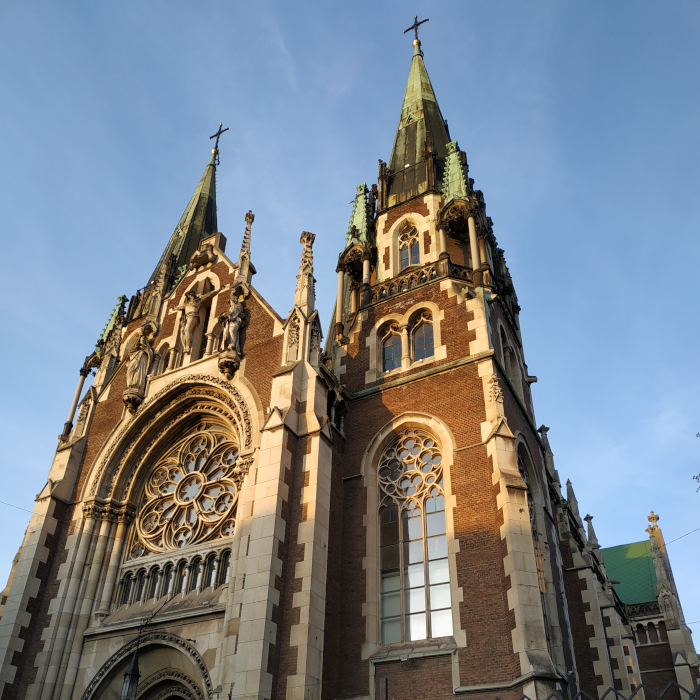
I agreed with Nick. Nick reminded me of the Greek word catharsis (κάθαρσις) — a moment of profound emotional and spiritual cleansing, of inner elevation. He continued:
– People’s psychology varies. That’s the important issue. Those things what you might perceive with a sense of awe, another person might view merely as a work of art — nothing more. I, for instance, can see divinity in it, whereas a man in a suit might neither see nor feel the same thing.
I reflected on this and asked:
– How else would you explain it? Are there no other reasons besides psychology?
– I don’t know, my friend. Perhaps not. It could simply be a lack of willingness, – Nick replied skeptically.
After a moment’s thought, I explained myself:
– I believe the psychological aspect is something acquired rather than innate — unless we look at physiology or genetics. Simply put, it’s not just what is inherited from one’s parents that matters, but also a person’s independent choices and the habits formed by those constant decisions. We were talking about history; one need only recall a few famous figures and compare them across their childhood, youth, and adulthood—observing the paths they ultimately chose.
A spark seemed to light up in Nick’s eyes, so I decided to elaborate:
– Our ability to see or not see, to feel or not feel, depends on the state of the soul and the heart — not just the mind. – The man certainly wouldn’t be wearing a suit or handing out invitations like that if he attended this church — even just on Sundays
Nick asked:
– But isn't that like the frog effect? You know, when a frog is gradually lowered into warmer water and only ends up in hot water at the very end, having had time to get used to the change? Even if that process dulls one's spiritual receptors, the same method could apply to churchgoers. As I said, upbringing might play a role, too.
— Hmm, I don't think that example fits. The frog effect is about a gradual, step-by-step process. A person faces many choices in life — both big and small — that depend largely on the individual themselves; not when they are being taught or raised by someone else, but when they are free to choose entirely on their own. Often, the choice comes down to seeking God versus getting another hit of dopamine. So, why do you think people so often choose the spiritual path?
— That’s an interesting question, — Nick mused. — I think there’s some kind of internal trigger, or perhaps an experience from the past.
— Or anxiety about the future, — I added, picking up on Nick's thought. — The only way I can explain it is that a person carries a spark of God within them.
It was a bit unexpected, but Nick agreed with that last point. Dusk was already falling; after having a cup of cocoa, we talked about his family and my thoughts on my own future family. Afterward, we decided to meet the next day in the media room to try improvising some music.
I was returning home and thinking about what Nick had said.
A friend compelled me to notice more — to see the various facets of the individual, of society, and of the world. This did not diminish the God I had managed to glimpse in various guises, nor did it lessen the inherent weight of life. Yet, following our last conversation, a new dimension — the historical — was added to that weight of life. While the scope and diversity of cultures are vast in our time, any observer loses the ability to take it all in at a glance once they begin looking back across generations and engaging in analysis.
Nick helped me take off the "glasses" that might have been hindering me from viewing the world more broadly — as if peering beyond certain boundaries — and which I could now cast aside; meanwhile, I hoped I had given Nick a telescope that would allow him to discern things in the sky invisible to the naked eye.
After covering five miles, beyond which lay the slope and the expanse of the sea
This time, the three of us met — Nick and his wife included. Nick admitted that, earlier that morning, the two of them had wanted to discuss what we had talked about the day before. His wife said:
— It really makes sense to ask people these questions. It helps them verify whether they are on the right path and if they are truly seeking that God Nick and I once watched a drama called "God’s Not Dead", in which a student refused to sign Professor Radisson’s statement that "God is dead." The professor required students to sign it to pass his course, but the film’s protagonist refused and accepted the professor’s challenge to defend his faith.
— That’s interesting! — I said. — I should watch that movie, too.
— Great! — Nick's wife responded. — You know I don’t know about you, but I realized two important things. The first is that God is so close that it becomes difficult to distinguish or single Him out. You reminded Nick that He is within each of us — and that’s exactly the point: He is far, far greater than any human — infinitely holy — yet at the same time, He is present within us. That closeness makes it hard for us to seek Him, so we often push Him out of our lives.
— Oh, yes, — I said, exhaling. — And what is the second thing?
— The second is that before seeking God, it’s worth at least trying to reflect on His nature. I know that’s not easy. If you believe He is unfathomable, as the Bible says, then there is no need to try to outpace yourself using your own strength or intelligence. Every spiritual revelation must be accompanied by humility and discernment. After all, you discover Him at the most unexpected moment.
— Just as unexpectedly as my wife revealed herself to me — Nick added with a touch of humor.
We laughed, and I said to Nick:
— But that gives us plenty of food for thought, so your wife is right.
— And what about the soldiers for whom so many doors are closed? Facing death, fear, and disaster every day, they often feel that God has abandoned them — and the very place where they are, — Nick continued, challenging my perspective.
— That’s a valid point — I said. — I can only speculate about it. But that is precisely what drove me to seek spiritual answers during my first year here after moving from England. I am certain that God reveals Himself to them, too. It simply takes a different form than it does for us — people living in ordinary circumstances.
— You think about these things, and I respect that — though it would be good to revisit this later, once I’ve sorted out my own thoughts on the matter. It takes time, — Nick said.
— Yes, absolutely — I replied cheerfully.
Nick patted me on the shoulder and said:
— A change of scenery does us good. — You mentioned that you had been to Kyiv—the city known as the heart of Ukraine. It must be a multifaceted city in its own right, quite different from Lviv.
— Exactly; I discovered a great deal there — I replied with a smile, sharing a few things about Kyiv with him.
God who is beyond the universe
I decided to stop, giving my friend some space to reflect. When Nick mentioned the military, I felt once again that even this world — with all its sorrows — is incapable of fully revealing God to us. He is, after all, greater than this world. Consequently, He can offer more than the world gives or what we receive from life itself.
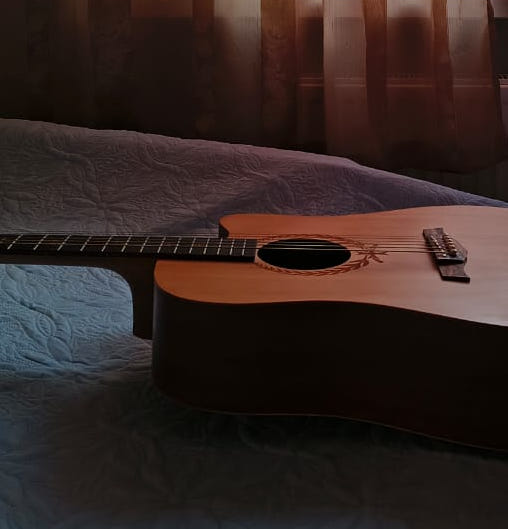
When we entered the media room, we decided to improvise some music: I played my electro-acoustic guitar, while Nick played his electric one. It was a melody Nick and his wife had been working on, and to me, it was a masterpiece.
We paused a few times to try again. During one of the breaks, Nick and I tuned our strings in order to even out the sounds. For a moment, I thought about the body of the guitar I was playing. It struck me that, just as the hollow body of my guitar acts as a resonator — amplifying and enriching the sound — the same way does a person’s effort to glorify God through seeking Him is a kind of music that makes the Angels sing as the sound waves ripple outward. Nick’s electric guitar, unlike mine, resonated differently. Yet in both cases, one that mattered most was how we played and the music we created.
Comments
No Comments